
Respiratory Distress: A-to-Z Guide from Diagnosis to Treatment to Prevention
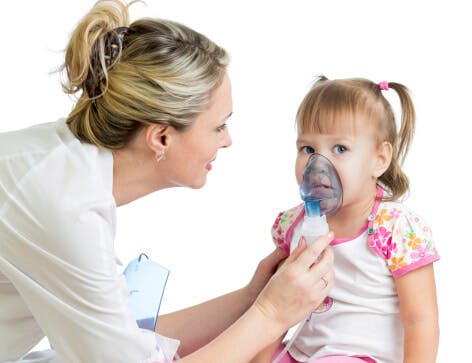
Is your child’s breathing ok? A child who has significant breathing difficulty needs immediate medical care. What signs should a parent look for?
What is it?
Respiratory distress is the name given whenever a child’s respiratory system is in danger of not being able to keep up with the child’s needs for oxygen and gas exchange.
Respiratory distress can occur in a great many conditions, including those arising in the lungs, bronchi, bronchioles, heart, muscles, nerves, or brain. Respiratory distress is the most common diagnosis among children who need to be admitted to a pediatric intensive care unit.
Acute respiratory distress syndrome (ARDS) is an uncommon critical condition where the lungs fill with fluid and inflammatory cells. This may occur following major trauma, bone marrow transplantation, or after a variety of illnesses.
Who gets it?
Children’s airways are smaller than adults. Too much difficulty breathing is a problem, whatever the cause. Children might develop respiratory distress as a result of many situations including allergies, anthrax, asthma, botulism, bronchiolitis, CMV, concussion, cough, croup, cystic fibrosis, diphtheria, encephalitis, enlarged tonsils or adenoids, food allergies, foreign bodies, heat stroke, heart failure, HIV, measles, meconium aspiration, meningitis, mononucleosis, near-drowning, peanut allergy, pertussis, pneumonia, poisoning, polio, reflux, RSV, sepsis, sickle cell anemia, shock, SIDS, sleep apnea, trauma, tuberculosis, or wheezing – among other things.
What are the symptoms?
As children’s breathing becomes increasingly difficult, they tend to develop observable signs. If any of these are present, get in touch with your child’s doctor right away:
- Rapid breathing (especially faster than 60 breaths a minute)
- Working hard to breath (using extra muscles, as in the shoulders, neck, or abdomen)
- Flaring (of the nostrils with each breath)
- Retractions (especially pulling-in of the muscles between or just below the ribs)
- Grunting (due to closing the vocal cords at the end of each breath)
- Blue or dusky skin coloring
- Change in mental alertness or speech
Most children will breathe rapidly as they enter respiratory distress. As it progresses, they may breathe unusually slowly and/or shallowly.
Is it contagious?
No, although the underlying cause may be contagious.
How long does it last?
Until the underlying cause is corrected.
How is it diagnosed?
Respiratory distress is first diagnosed based on the history and physical exam. A pulsoximeter may be used to give a quick estimate of the child’s oxygen status. Treatment is often begun before attempting further diagnosis to pinpoint the cause and severity.
How is it treated?
Respiratory distress requires immediate respiratory support. This might include oxygen, medications, and physical help with breathing. Depending on the severity, other support measures may be needed.
How can it be prevented?
Often, treating the underlying condition before it progresses can prevent respiratory distress. This is especially true of chronic conditions such as asthma, where a preventive strategy is very important.
Some causes of respiratory distress can be avoided altogether, either through childhood immunizations or by other means (see articles on the individual causes).
Related concepts:
Breathing difficulty, Shortness of breath, Acute respiratory distress syndrome, ARDS.
Alan Greene MD


Our goal is to improve children's health by inspiring parents to become knowledgable partners who can work with their children's physicians in new and rich ways.