
Sleep Apnea: A-to-Z Guide from Diagnosis to Treatment to Prevention
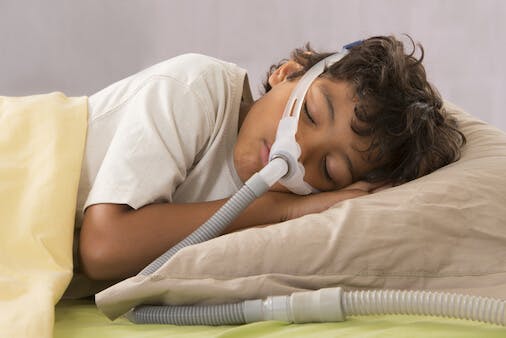
Introduction to sleep apnea:
Parents are quick to mention some things to their pediatrician: fevers, seizures, and bleeding. Snoring is another important symptom that your child’s doctor needs to know about, though it often goes unreported. Any child who snores may have obstructive sleep apnea, and may not be getting adequate sleep.
Not all kids with apnea snore. Even when they do, sleep apnea is often overlooked. Instead, the child may be diagnosed with a behavioral disorder — most commonly ADHD.
What is sleep apnea?
Most people make some quiet snoring noises when they have (or are recovering from) a cold but this quickly resolves after the cold. Some people snore even when not ill, and some snore loud enough that others can easily hear them. In these cases, snoring may be the sign of obstructive sleep apnea syndrome (OSAS), where there is prolonged partial blocking, or intermittent blocking, of breathing during sleep. The obstruction is usually caused by large tonsils or adenoids, which may be temporarily enlarged by infection or allergies.
Children with this condition do not get sound sleep. They may also get suboptimal oxygen to the brain at night. Obstructive sleep apnea can have a serious negative impact on a child’s intellect and behavior.
OSAS can cause growth problems. It has also been linked to ADHD, poor school performance, learning difficulties, bedwetting, high blood pressures, lung disease, heart disease, and rarely even death.
OSAS is different from primary snoring (PS), the name given to snoring that doesn’t cause sleep disruption or breathing problems. Primary snoring is more common than OSAS.
Who gets it?
OSAS occurs in about 2 percent of children. The peak age is 2 to 5 years old, but it can occur at any age.
In older children and adults, it is more common among the obese. It is also common in those with sickle cell disease, Down syndrome, birth injuries, or any other condition that might narrow the upper airway.
What are the symptoms?
Classically, those with sleep apnea snore quite loudly for a bit, then are silent (sometimes not appearing to breathe), then snort briefly, move about, and resume snoring. If snoring is accompanied by nighttime breathing difficulty and pauses in breathing, then it may well be sleep apnea.
However, many children with OSAS do not follow this classic pattern. OSAS and PS cannot be reliably distinguished from each other based on the symptoms alone.
Other common symptoms of sleep apnea include mouth breathing, restless sleep, difficulty paying attention during the day, decreased academic performance, oppositional behavior, and restlessness.
Is sleep apnea contagious?
No
How long does sleep apnea last?
Children often outgrow OSAS within several years.
How is sleep apnea diagnosed?
Snoring should be brought to the attention of your pediatrician. You might want to make a cassette tape of your child’s sleep noises to bring with you.
OSAS and PS cannot be reliably distinguished from each other based on the physical examination and history alone. Other tests must be used. A sleep study is the gold standard test for telling the difference. Thus, snoring needs to be reported to the doctor, and when snoring lasts longer than a brief respiratory infection, or fails to respond to allergy treatment, it deserves thorough evaluation. Often pediatricians enlist the help of ear-nose-and-throat, neurology, or pulmonary specialists to help distinguish between the two.
How is it treated?
Because enlarged tonsils and adenoids usually cause the obstruction, removing them can usually solve the problem.
Sometimes the obstruction is treated with gentle positive air pressure in the airway at night – nasal CPAP (continuous positive airway pressure).
Supplemental oxygen, and correction of anemia may provide additional help.
Decongestants, steroids, antibiotics, or other medicines might reduce snoring caused by enlarged tonsils or adenoids in PS but are unlikely to be of much help with true obstructive sleep apnea.
How can it be prevented?
Early treatment of primary snoring might prevent the cycle that leads to obstructive sleep apnea. Preventing or treating obesity and nasal congestion can also help protect children from OSAS.
Related concepts:
Snoring, Obstructive sleep apnea, OSAS, Adenotonsillar hypertrophy
Alan Greene MD


Our goal is to improve children's health by inspiring parents to become knowledgable partners who can work with their children's physicians in new and rich ways.