
Peanut Allergy: A-to-Z Guide from Diagnosis to Treatment to Prevention
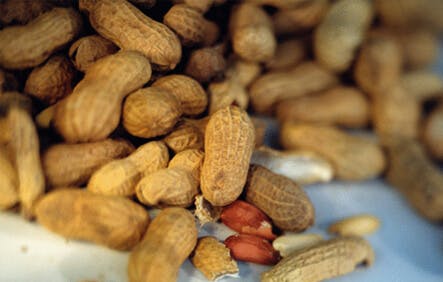
A child eats every few hours to take in the fuel that he needs for energy, growth, and bodily repair. Usually, eating is both fun and helpful. However, sometimes it is deadly.
What is a peanut allergy?
Some individuals have reactions to particular foods. These reactions can range from mild intolerance to fatal allergies. Most children have mild to moderate reactions (rash, wheezing, tingling, diarrhea, etc.) to the offending food before the allergy becomes severe. In a few children, the first time they eat the particular food, they become sensitized and the second time they eat even a miniscule amount of that food, an explosive reaction occurs.
Who gets peanut allergies?
Most children who develop life-threatening food allergies either have asthma or a family history of asthma, eczema, or hay fever. Life-threatening food allergies are not rare. Fortunately, as deadly and as common as they are, very few children actually die from them.
Note: Peanut allergies and nut allergies are different allergies. Peanuts do not grow on trees and are not true nuts.
What are the symptoms of a peanut allergy?
Life-threatening food allergies can kill children in two ways. The first is called laryngospasm. As the food is swallowed, it produces immediate swelling that spreads to the vocal cords. If the vocal cords swell shut, the child is unable to breathe and dies with terrifying rapidity. The second mechanism is called anaphylactic shock. The child swallows and digests the food and, as long as two hours later, goes into shock and dies.
Common foods that cause anaphylaxis include nuts, peanuts, shellfish, fish, eggs, celery, legumes, and cheeses that contain mold.
Are peanut allergies contagious?
No.
How long does a peanut allergy last?
Children with life-threatening food allergies do not tend to grow out of them. Without treatment, they should be considered lifelong conditions.
How is a peanut allergy diagnosed?
Anyone with a suspected nut or peanut allergy, or with a suspected life-threatening food allergy, should be evaluated by an allergist. Possible tests include a diagnostic blood test, called a RAST test, which measures antibodies to specific allergens. Skin testing might provide useful information, but must be done carefully as it is riskier than RAST testing in severely allergic individuals.
How is a peanut allergy treated?
The core of treatment is absolute and complete lifelong avoidance of the offending food in any form.
Most intake of nut products by people with known nut allergies occurs when the nuts are present as a hidden ingredient, perhaps in a cake, cup cake, or even chili. One young man ordered a chocolate chip cookie with no nuts at a nationally known cookie store. On his first bite, he recognized it as a peanut butter chocolate chip cookie. This wasn’t soon enough — moments later a full-scale resuscitation was underway. He left the cookie store on a ventilator. Thankfully, he survived.
No matter how careful you are, it is almost inevitable that it will happen — your child will eat the dangerous food. I say this now in hopes that when it happens, you will remember my thoughts and see yourselves with the same compassion that I feel for you at this moment — not with guilt or judgment. I also tell you this so you will take the second phase of treatment seriously. You must be prepared to deal with the emergency when it happens.
Learn CPR. Now.
Children with life-threatening food allergies need a kit with easily injectable epinephrine (also known as an Epipen). Make that two kits. Epinephrine is the one drug that can stop this reaction in its tracks. Parents should each carry an Epipen with them at all times, 24 hours a day. It is important that parents are comfortable using it.
Signs of an allergic reaction include facial or neck swelling, breathing difficulties, lightheadedness, nausea, vomiting, rash or flushing associated with a nut ingestion. If you think there has been any nut ingestion and your child exhibits any signs of an allergic reaction, USE IT! Don’t wait and see. Use the Epipen and take your child to the emergency room immediately. If your child is having difficulties breathing, you should call 911.
Once you have educated yourself on emergency care, it is vital that you educate any other adult who will be caring for your child. These adults should know CPR and should have an Epipen kit. In a chilling study from Johns Hopkins University, thirteen children with life-threatening nut allergies were followed and six of them died. All six of these children had ingested nuts while at their various schools. They immediately went to their school nurses who told them to lie down and see if they felt better. Each of them did feel better and went back to class — and died. Speak with your child’s teachers, principal, and school nurse – in person. Any adult taking care of your child should be given a written note that indicates your child has a life-threatening allergy. Consider purchasing a medical alert bracelet—an identification bracelet that has your child’s name and allergy.
You will also benefit from links to other families going through the same thing. Food allergy support groups are available in many locations.
Some of the research being done right now in life-threatening food allergies is very exciting. Companies are working on products to block this type of allergic response at the cellular and molecular level. This research is quite promising, but still only investigational.
One of my colleagues at Stanford, Kari Nadeau, is involved in fascinating and promising laboratory and clinical research on peanut and other food allergies. Her work on oral desensitization of peanut allergy and other food allergies seems to have potential to change the way we treat food allergies in the future. For more information on Dr. Nadeau’s work, see the Stanford Alliance for Food Allergy Research (SAFAR) website at Sean N. Parker Center for Allergy Research at Stanford University.
How can a peanut allergy be prevented?
Raising children in a smoke-free environment, beginning in before birth, can help prevent development of severe allergies. Pregnant women with a strong family history of allergies should avoid peanuts during pregnancy.
Breastfeeding can help prevent severe allergies, especially if the offending foods are avoided during nursing. This is more effective for some foods than for others. Delaying the introduction of allergic foods and exposures can also reduce food allergies.
Related concepts:
Nut allergy, Life-threatening food allergies.
Alan Greene MD


Our goal is to improve children's health by inspiring parents to become knowledgable partners who can work with their children's physicians in new and rich ways.