
RSV: A-to-Z Guide from Diagnosis to Treatment to Prevention
What is it?
RSV, or respiratory syncytial virus, is one of the most important respiratory infections of early childhood. The virus lives inside the cells lining the respiratory system, causing swelling of this lining coupled with the production of large amounts of excess mucus.
In adults, this shows up as a bad, lingering cold with thick nasal congestion and a deep, productive cough. In infants, however, the excess mucus can be enough to plug their small airways or bronchioles, resulting in a severe illness that requires hospitalization. RSV is the most significant cause of bronchiolitis and pneumonia in babies and young children.
Who gets it?
Almost all children have had RSV by the time they are two years old. Children who first get it under 6 months of age (or who have serious underlying illnesses) are at the highest risk for severe disease. Thankfully, severe RSV infection is very uncommon in the first 6 weeks of life, because these babies still have antibodies from their mothers.
If a child has RSV it’s usually best to stay out of daycare or school for 8 days, unless symptoms resolve sooner — which they often do, especially for those who have had RSV before.
RSV occurs throughout the world, and in each location, it tends to occur in yearly winter outbreaks, starting in the fall and peaking mid-winter. In the northern hemisphere, the peak of the epidemic is usually in January, February, or March, although in some years it may begin earlier and/or end later. Although most babies have mild illness, almost 80,000 infants are sick enough to be hospitalized with RSV each year in the United States.
In children under 5 years of age, RSV accounts for 2.1 million outpatient visits a year.
Up until 2020, the yearly onset and peak of RSV was very predictable. However, in 2021, RSV and other respiratory viruses began to rise in the spring and peaked mid-July 2021. It is too early to tell when the more typical pattern of onset and peaks may return.
What are the symptoms?
Typically, a parent, or more likely an older sibling, comes down with a bad cold first. He or she exposes the baby to the virus. The time from exposure to illness is usually about 4 days, give or take a few.
Then the infant typically develops a runny nose and a red throat. Over the next 3 days or so, the infant gets sicker. Symptoms might include cough, wheezing, and sometimes a fever or an ear infection. In most infants, this is as severe as RSV gets.
The virus runs its course over about a week or two.
Some, though, will get progressively sicker with fast respirations (>60 per minute), difficulty breathing, dehydration and listlessness. About 3 percent of infected infants get sick enough to require hospitalization. In the hospital these infants or children may require supplemental oxygen or IV fluids for a couple days until their symptoms improve to a point where they can safely go back home.
The specific symptoms will depend on the specific child and on the parts of the respiratory tract infected (croup, bronchitis, bronchiolitis, pneumonia, etc.). In very young babies, less than a month old, the only symptoms might be poor feeding, irritability, or perhaps lethargy.
Is it contagious?
RSV is very contagious. The disease spreads when infected droplets in the air or on the hands encounter someone else’s mouth or nose. It has never been shown to be passed from someone standing as far as 6 feet away. It can remain on the hands for half an hour, and on fomites for hours.
How long does it last?
The disease usually lasts 5 to 12 days. Most who are hospitalized are well enough to go home within a few days.
Children who are sick enough to come to medical attention and be diagnosed with RSV have an increased chance of having recurrent wheezing later in life. This is even more likely if the child has eczema or if there is asthma in the family. The older a child is (over the age of 1) with severe RSV, the higher the likelihood that the child eventually will be diagnosed with asthma.
A simple blood test may predict which children are most likely to go on and develop asthma. Some studies have shown that children with RSV bronchiolitis who had a high eosinophil count at the time of the illness may have a higher chance of persistent wheezing and of developing asthma.
While RSV and asthma certainly go together, even with severe RSV and a high eosinophil count, there is a good chance of avoiding asthma altogether. It is not known whether the virus damages the respiratory system thereby causing the asthma, or if people’s susceptibility to asthma predisposes them to severe RSV. I suspect that it is a little of both.
How is it diagnosed?
Rapid RSV tests are available and are done using nasal swabs. RSV is also commonly diagnosed without any testing whatsoever. Your pediatrician can recognize the common symptoms of RSV and provide good advice on treatment.
How is it treated?
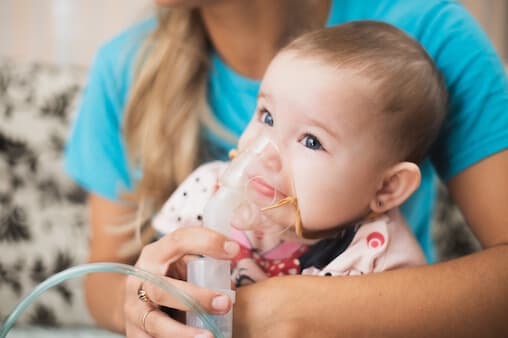
There are no specific medicines for treating RSV at home. It is important to give plenty of fluids to prevent dehydration. Also, a cool mist humidifier or saline nose drops might be recommended to help thin the mucus. Some children need supplemental oxygen or even mechanical help to breathe. A powerful aerosol treatment specifically against RSV is sometimes used for hospitalized children.
Steroids and antibiotics are not usually helpful.
How can it be prevented?
In addition, good hand washing, particularly just before anyone handles susceptible infants, can decrease spread. Use a tissue when you cough or sneeze! Try to avoid close contact with sick people and teach your children to wash their hands with soap and water before touching their face. Parents of children who are at high risk for developing severe RSV (e.g., infants with a history of prematurity, cardiac defects, and lung disease) may want to limit the time in childcare centers during peak RSV season.
Scientists are currently working on developing an RSV vaccine, but there are none right now on the market. There is a medication, palivizumab (Synagis), that is available to help with preventing RSV infection. Right now this is only approved for us in high risk children (e.g., infants with a history of prematurity, cardiac defects, and lung disease). This medication does not cure or treat RSV, it is used to help prevent severe cases.
References and Resources
American Academy of Pediatrics Committee on Infectious Diseases; American Academy of Pediatrics Bronchiolitis Guidelines Committee. Updated guidance for palivizumab prophylaxis among infants and young children at increased risk of hospitalization for respiratory syncytial virus infection. Pediatrics. 2014 Aug;134(2):415-20.
Ehlenfield, D, et al. Eosinophilia at the Time of Respiratory Syncytial Virus Bronchiolitis Predicts Childhood Reactive Airway Disease. Pediatrics 2000; 150(1): 79-83.
United States Center for Disease Control and Prevention. Guideline for Isolation Precautions: Preventing Transmission of Infectious Agents in Healthcare Settings (last updated May 2022) https://www.cdc.gov/infectioncontrol/pdf/guidelines/isolation-guidelines-H.pdf
Alan Greene MD


Our goal is to improve children's health by inspiring parents to become knowledgable partners who can work with their children's physicians in new and rich ways.