
What is Impetigo?
Question
What is impetigo?
Dr. Greene's Answer
The two major types of bacterial skin infections are folliculitis and impetigo. Folliculitis is an infection of the hair follicles. Impetigo is a superficial infection of the skin itself. Impetigo usually begins with flat, red, 1-2 mm lesions, which quickly rise to little blisters or pustules, and eventually to open sores, often with a soft yellow-brown scab. These lesions can spread locally or under the skin and pop up at distant sites.
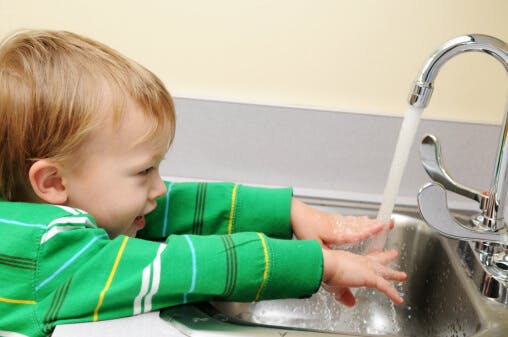
Each lesion is teeming with aggressive bacteria, but the bacteria cannot enter intact, healthy skin. Each time you touch the impetigo and then scratch another part of the skin with that finger, you can start a new spot of impetigo. (It is wise to keep your nails trimmed and to wash your hands often with an antibacterial soap). Others can catch impetigo from you if the bacteria come in contact with a break in their stratum corneum.
Two types of bacteria are the main culprits: staphylococcus (staph) and streptococcus (strep). Gentle washing with a bactericidal cleanser can help prevent local spread and reoccurrence, but antibiotics are the mainstay of therapy.
Topical antibiotic ointments are very effective for staph impetigo (which is more commonly seen around the nose and on the trunk or arms). Bactroban (Mupirocin) ointment is the most effective topical antibiotic, but failures and relapses are more common. Bacteria live under the yellow-brown scabs. If these are present, they must be removed in order for a topical antibiotic to work. Soaking in warm water with a liquid antibacterial soap is usually effective in removing them, but gentle rubbing is sometimes necessary. Older children who suffer from frequent cases may benefit from once a week baths in a tub filled with water and ¼ cup bleach. This reduces the amount of bacteria on the skin and may prevent recurrences.
Oral antibiotics are a faster and more reliable therapy in stubborn caseso. They are recommended if the impetigo appears widespread or deep, or if the topical antibiotic is likely to be licked off.
Alan Greene MD


Our goal is to improve children's health by inspiring parents to become knowledgable partners who can work with their children's physicians in new and rich ways.