
Thumb-sucking: A-to-Z Guide from Diagnosis to Treatment to Prevention
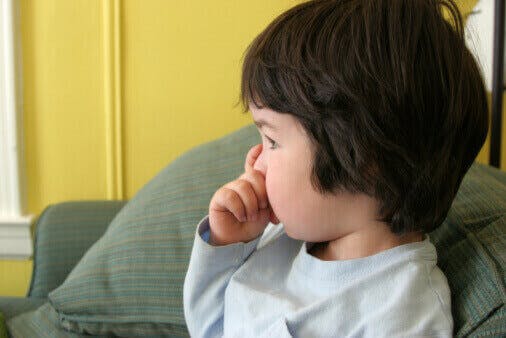
Introduction to thumb sucking:
When Jacques Cousteau first took cameras under water, he opened up an enchanted new world for us to see. When ultrasound was first turned toward the wombs of pregnant women, an even more marvelous world appeared. Sights that had been hidden for ages were now open to our view, and one of the first things we saw was that babies suck their tiny thumbs even before they are born.
What is thumb sucking?
Infants are hard-wired to need and enjoy sucking as a separate experience from feeding. This is sometimes referred to as “non-nutritive sucking.”
Some babies who do not suck their thumbs can be comforted, stimulated, or put to sleep through pacifier use. This sometimes feels more acceptable to parents because they can control the use of pacifiers. One problem with pacifiers is that young babies cannot find them when they fall out of their mouths, which happens quite frequently. Babies who use pacifiers are dependent on an adult who must understand their needs and respond to them.
Children who suck their thumbs are able to begin at an early age to meet their own need for sucking. These children fall asleep more easily, are able to put themselves back to sleep at night more easily, and sleep through the night much earlier than infants who do not suck their thumbs.
Who gets thumb sucking?
In some babies, the need to suck is more pronounced than in others. Children at any age tend to exhibit the sucking behavior most when they are tired, bored, or in need of comfort.
What are the symptoms of thumb sucking?
For children in the first year of life, sucking to fall asleep or for comfort is self-limiting and wonderful. If they are sucking their thumbs simply because they are bored or are “zoned out,” it is a good idea to distract them by handing them something interesting to hold on to, without even mentioning their thumbs. Until your baby is old enough to reason with, any pressure applied against thumb-sucking will only turn a natural developmental phase into an ingrained habit.
Is thumb sucking contagious?
No
How long does thumb sucking last?
Many parents are worried that their children won’t stop thumb-sucking at the appropriate age. The great majority of children stop thumb-sucking spontaneously as they get caught up in learning new skills and no longer need to be stimulated or comforted by sucking. The sucking need usually diminishes by around 9 months. Most children have finished with sucking their thumbs by their first birthdays.
But behavior that is adorable in one so young can be a concern in an older child.
How old is too old? According to the American Dental Association, thumb-sucking does not cause permanent problems with the teeth or jaw line unless it is continued beyond 4 to 5 years of age. As it turns out, somewhere between 85 and 99 percent of children have finished thumb sucking spontaneously before this period.
How is thumb sucking treated?
If your child has not spontaneously stopped thumb-sucking by the time she is talking, there are ways to actively encourage her to stop.
Children have control of their own thumbs when you are not looking. Pressure applied against thumb sucking can turn a natural developmental phase into an ingrained habit.
Instead, you want to create an environment where she chooses to stop on her own. You can weaken the thumb-sucking habit by distracting her when you notice her thumb in her mouth. Engage her in a way that she uses both hands.
Painting something that tastes yucky on the thumbs can make sucking them less satisfying. Commercial products are available for this purpose. Other parents have had success with pickle juice or a drop of vinegar. You might have to switch flavors periodically because people can develop a taste for almost anything. (I remember my first cup of coffee – yechhh!)
If she decides she wants to stop, yet the habit continues, then helping her notice when she is doing it can help her. Otherwise, pointing it out will only seem like nagging.
Comments from other people, though, can be helpful. Her pediatrician and dentist can be important allies, helping her to feel that she wants to stop because she is growing up!
Having children that she respects (and who don’t suck their thumbs) over for sleepovers can also help. If they comment on her thumb sucking, it can be a powerful motivation. If she doesn’t suck during the sleepover, it further weakens the habit.
Without nagging or battles, almost all children will stop before age 4 or 5. For the very few that don’t, their dentists can help with sleepy-time appliances and other techniques.
How can thumb sucking be prevented?
Many parents are concerned that thumb-sucking at a late age is a sign of emotional immaturity or lack of self-confidence. When investigators have looked at late thumb-suckers for common traits, they found only one thing in common that distinguished them from other children — a prolonged history of a strong battle with thumb-sucking at an earlier age. It is striking that many well-meaning parents have actually encouraged thumb-sucking by trying to forcibly take the thumb out of their children’s mouths.
Alan Greene MD


Our goal is to improve children's health by inspiring parents to become knowledgable partners who can work with their children's physicians in new and rich ways.