
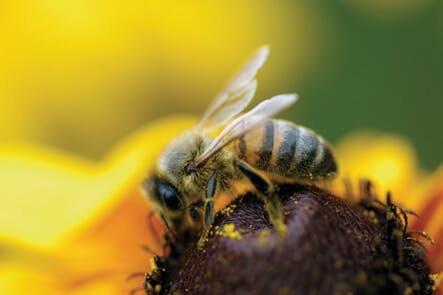
Treatment of Bee Stings

article_treating_beestings.jpg

If one is stung, the wound can be treated in the following ways:

  • Remove the stinger with all haste, in whatever manner is most convenient. I like scraping across the skin with a credit card to try to remove the stinger. If you see a little black dot in the wound, part of the stinger is still present.


  • Apply a solution of one part meat tenderizer to 4 parts water. Papain, the enzyme in meat tenderizer, breaks down the protein in bee venom responsible for the pain and itching. Don't leave this on for more than 30 minutes, or it can irritate the skin. If this isn't available, you might try an antiperspirant. Aluminum chlorohydrate reduces the effect of bee venom, but to a lesser extent.


  • Apply cold. Use ice or cool water for 10 to 30 minutes after the sting. This blunts the body's allergic response.


  • An antihistamine such as Benadryl, taken by mouth, can give some added relief, and help prevent the reaction from spreading.


  • A shake lotion such as calamine can be helpful. A paste made of baking soda and water can have a similar effect.


  • Topical hydrocortisone can also provide some symptomatic relief.


  • A topical antibiotic ointment can also be used to help prevent infection.


  • Give acetaminophen or ibuprofen for systemic pain relief.

After a bee sting, different children will have different reactions:

  • Bee stings cause immediate, painful red bumps.


  • In most cases, the pain has largely disappeared within 2 hours, although swelling may not be apparent until the next day.


  • Large local reactions at the site of the sting can start 12 to 36 hours after the initial sting and can persist for up to a week. A physician should be consulted if the reaction continues to spread or there is a systemic reaction.


  • Systemic reactions such as hives, redness, or swelling elsewhere on the body, vomiting, dizziness, hoarseness, thickened speech, or difficulty breathing, should receive prompt medical care from a physician. Also, be sure to see a doctor if there were 10 or more stings, or if one of the stings was inside the nose or mouth, since swelling can interfere with breathing.

A child who has had a systemic reaction to a bee sting (which I can personally relate to) should follow special precautions set forth by his or her pediatrician. This will include carrying injectable epinephrine (which I do).

Although systemic reactions occur in about 3% of children who are stung, and anaphylactic shock can follow as many as 0.8% of bee stings, thankfully only 50 people in the United States are killed by bee stings each year, and only 1 to 2 of these are children. You may want to consider having your child wear a medical alert braclet if they have a significant allergy to bee stings.

4.53846


  • Allowed HTML tags: <em> <strong> <cite> <ul> <ol> <li> <dl> <dt> <dd>

More information about formatting options

CAPTCHA
This question is for testing whether you are a human visitor and to prevent automated spam submissions.
Image CAPTCHA
Enter the characters shown in the image.

Comments

Anonymous's picture

bee sting

5
as always,dr greene provides factual and thorough answers. thank you
Anonymous's picture

bee sting treatment

My mothere made a paste of garden soil and saliva. Aplied it to the sting site after the stinger was removed. Voila! pain and inflamation gone.
Anonymous's picture

thank u

5
thank u
Anonymous's picture

treatofbeessting

the treatment did help the bees sting I only had 2
Anonymous's picture

sent this right to my

5
sent this right to my daughter whose child was stung this morning good quick info thank you
Anonymous's picture

Very helpful - thank you!

Very helpful - thank you!
Anonymous's picture

Bee Sting

my 5 yr old daughter was stung by a bee for the first time yesterday. she is still crying today that the bottom of her foot hurts where she got stung. how long does the pain last from a sting? I have looked and where she got stung almost looks like a bruising effect about 1.5" in diameter.
Anonymous's picture

Thanks Dr. Greene!!! I don't

5
Thanks Dr. Greene!!! I don't think most people know what to do for a bee sting... I always just put ice on it. Great summer time tips : )

Epsom Salt

Epsom salt can be a great remedy for bee stings. After removing the stinger, apply a paste made from Epsom salt and a little water. It can reduce inflammation and pain ver quickly. Epsom salt soaks can also help. Epsom salt is magnesium sulfate, and is a gentle home remedy that has been used for centuries in a lot of different ways. Check out this interesting study on how it could even be used in a hospital setting to prevent cerebral palsy in children: http://www.drgreene.com/blog/2008/08/29/epsom-salts-and-cerebr...
Anonymous's picture

After removing the stinger,

After removing the stinger, salt will instantly take the pain away...
Anonymous's picture

bee sting/yellow jacket

I have been stung by a yellow jacket, the pain was terrible. Why does this one bee effect me the same way every time i get stung? Simptons are: swelling, big red patch that is hot to the touch and looks and feels like corn bread crust. I have had to go to the Doctor for antib. Is there anything I can do to prevent this, other than trying not to get stung. Judy

Reply

Anonymous's picture

yellow jacket stings

Here in west Texas,as hot and dry as it stays yellow jackets are as common as mosquitoes are in Missouri. It's a full time job every other day to look for another nest that they have started to replace one torn down the evening before,using a spray from LONG distance. They also hurt me terribly and I have heard that when stung if you'll cut an onion in half and rub and hold it on the sting it will take away the pain as well as help reduce swelling.Other than look at everything BEFORE I touch it,or move it if it's been sitting for a few days I truly know of nothing more one can do to avoid them.Possibly a farm supply store might have some sort of chemical that might help repel them from ones property.Even our humming birds must learn to avoid them at their own feeders.