
CTs, MRIs, Ultrasounds: Differences, Risk & Benefits
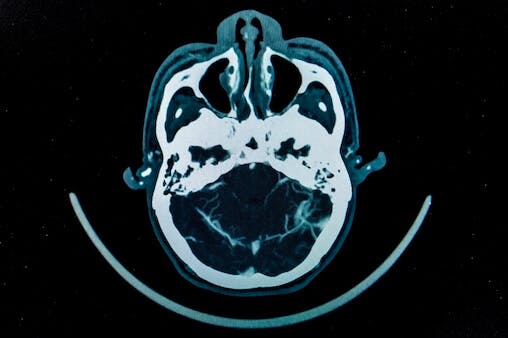
What is a CT Scan?
A machine whirs in an arc around a patient, snapping a rapid-fire series of x-rays from different angles. These x-ray snapshots are combined by a computer to produce virtual cross-section images of the body. These are called CT scans, which stands for computed tomography (computer-generated cross-sectional images).
CT Scans Compared to Ultrasounds and MRIs
When the CT scan was first introduced in the 1970s it caused something of a revolution in medicine, allowing doctors to see the inner structure of the body in a way that had been previously hidden – without surgery. Parents often wonder which is more effective –a CT Scan, ultrasound, or MRI. Each has its own areas where it is most effective.
CT Scan Safety
A few months earlier, the National Cancer Institute had sent out a letter to physicians in an effort to decrease unnecessary CT scans in children. In the previous decade, the number of CT scans in children each year had skyrocketed 700 percent — into the millions in the US alone. These CT scans had resulted in improved diagnosis, allowed for more effective treatments, and reduced unnecessary surgeries. But we’ve learned that some of these same benefits might now be achieved with fewer CT scans. And CT scans carry their own risk.
The American Academy of Pediatrics (AAP) has continued to look closely at this issue. In June of 2018, the AAP publish recommendations for CT scans that indicated “Clinical observation prior to CT decision-making for children with minor head injuries is an effective approach.”
CT Scans and Radiation Exposure
A typical x-ray delivers 0.01 mSv (millisievert) of radiation. CT scans give us much more information, but they can also deliver as much radiation as getting 300 regular x-rays — or 600, if the CT scanner has not been adjusted for children! Even though CT scans are a small minority of the total number of x-rays done, in the US they are responsible for about 65 percent of all medical radiation exposure.
In order to understand how this relates to day-to-day radiation exposure, I looked to information from the American College of Radiology. They have found that the average person living in the United States is exposed to about 3 mSv annually from “naturally occurring radioactive materials and cosmic radiation from outer space.”
CT Scan Risks
There is a tiny increased risk of cancer with each tiny increase in radiation exposure. These cancers are not found at the time of the CT scan, but decades later. Since so much time lapses by and since we are exposed to small levels of radiation every day, it is very difficult to determine exactly what the ultimate risk of cancer from a single CT scan may be. It’s not common, but some people do eventually die as a result of an earlier CT scan. Also, the radiation from head CT’s can cause significant eventual damage to the lens of the eye.
Higher Risks in Children
Radiation can certainly be harmful to adults as well. Unnecessary CT scans should be reduced at all ages, but this is especially important for children because children are far more sensitive to the risks of radiation than are adults. A young baby may be 10 times more sensitive than a middle-aged adult to the same dose.
And even when kids and adults are exposed to the same strength CT beams, kids get significantly higher doses because their thinner bodies allow the beam to penetrate them with higher intensity.
Also, children who are scanned usually have many more years of their lives ahead of them, giving them longer to develop any cancer a scan might cause.
Who Should Receive a CT Scan?
We want to CT children when the expected health benefit is clearly greater than the tiny increased risk of eventual cancer. To do this, we want to use other signs and symptoms to help decide which children are the most likely to have an important injury inside the skull.
The CT scan is intended to help solve the mystery of what is going on inside the body: When used properly, I would still expect that many children who receive CTs will turn out to be well. Nevertheless, it is wonderful whenever we can use other clues to remove children from the ‘mystery’ group without the amount of radiation exposure needed for a CT scan.
After suffering severe traumatic injury to the head, we would likely all agree that a child would benefit from detailed imaging of the extent of injury to the skull and brain. The controversy arises when deciding how to treat children who have sustained a minor trauma, or “mild traumatic brain injury.”
Research so far suggests that after a relatively minor head trauma the most important kids to scan include those who are dizzy or who have changes in vision or behavior (including everything from excessive sleepiness to vomiting, to seizures). Children under 2 are also good candidates. They are at high risk and often can’t tell us if they are experiencing vision changes or dizziness. Those whose injuries were obtained at great force – such as those in bicycle accidents – are also in the high risk group of internal head injuries, as are those in whom a skull fracture has been found.
X-Ray or CT?
I was taught as a pediatric resident that skull x-rays were obsolete, that if you were wondering about a fracture you should just get the CT to avoid exposing the child to radiation twice. I now disagree.
While a CT scan can indeed answer the skull fracture question (and more), it takes hundreds of times more radiation to do this. If a skull fracture would be the only reason for getting a CT, you can settle that question with a regular skull x-ray first, saving many children from unnecessary CT scans.
Alternative to CT Scans
Plain x-rays use low doses of radiation but give limited information. Sometimes this limited information is exactly what is needed. What to do if more detail is needed? CT scans are one possibility.
As technology advances rapidly, medical imaging possibilities are also changing quickly. Still, the most common alternatives to CT scans are ultrasounds and MRIs. Unlike CT scans, neither uses ionizing radiation. Ultrasound constructs a picture using sound waves; MRI uses magnetic fields to produce an image that often has greater clarity than a CT.
Ultrasounds are blocked by bone, so head ultrasounds are not an option once a child’s soft spot has closed. Current head MRIs are not a good option for emergency evaluation of head trauma, in part because they can take 45 minutes or more to obtain, even when everyone is available and ready. When it comes to most head trauma (once the soft spot has closed), the best imaging options remain skull x-rays (to look for bone fractures) and CT scans (to look for injuries inside the skull). The main alternative to these is careful examination and observation.
MRIs are almost always preferable to CTs for imaging the head, and usually for the spine, except during trauma or when MRIs are not practical – such as when there are metal clips in the head. Even without the ionizing radiation, MRIs provide equal or superior imaging. MRIs are also better than CTs for most musculoskeletal problems. Unfortunately, since MRIs take so much longer, children often need to undergo sedation, with its own risks, in order to remain still long enough for an MRI.
For imaging the abdomen or pelvis, the best bet might be ultrasound, MRI or CT, depending on the situation. I prefer using ultrasound whenever it will work.
Within the chest, especially within the lungs, CT scans remain the option of choice for most situations – though even here, MRI may become the best over the next few years as the technology continues to improve.
When should a CT Scan be Performed?
CT scans are usually the best imaging studies for looking inside the skull following head trauma. They are also the best imaging studies for other specific situations, including looking inside the lungs for cancer.
After a head trauma, the advantages of CT scans are most clear for those children under 2, those experiencing dizziness, vision, or behavior changes, those with skull fractures, and those with a mechanism of injury likely to cause a serious problem (this is one reason I’m such a big fan of bicycle, skateboard, scooter, and motorcycle helmets). If the doctor has a high degree of suspicion that there is a problem, a CT scan can be the wisest thing to do.
Important Tip to Reduce Radiation Exposure
The amount of radiation used for a CT scan depends on the part of the body being examined and the level of detail needed. Far less radiation exposure is needed to get the same image clarity in a child. Adult CT settings give four times as much radiation as is necessary to image a baby’s abdomen, and they give twice as much as is needed to scan its head.
A typical CT scan beam is set at 200 mAs (millampere-seconds) for a head CT. This would deliver about 60 mSv of radiation to a baby. A pediatric setting of 100 mAs would expose the baby to only about 30 mSv of radiation and would still provide excellent picture quality.
As a rule of thumb, the pediatric dose for a head CT should be about half that of an adult, but this should be individually adjusted for the child’s size.
Parents will only know if an adjustment has been made if they ask. If you ask, “Has the scanner been adjusted?” it might be easy for someone to answer, “Yes,” without thinking. You are more likely to get a thoughtful answer if you ask, “How will you adjust the scanner for my child?”
Questions to Ask Before Every CT Scan
CT’s are wonderful, lifesaving technology, but as with antibiotics, it is wise to ask if there is a safe way to diagnose the situation without a CT. If a CT is recommended, it is wise to ask that a child-appropriate level of radiation be used, to cut the radiation risk in half.
- Is a CT scan the best examination for my child?
- How will the CT scan be adjusted based on my child’s size?
- Will a radiologist be involved in my child’s CT scan?
Radiologist vs X-ray Tech
A radiologist is a physician who specialized in imaging techniques after completing medical school. If one is involved in doing or interpreting the CT scan, there is a higher chance that it will be set for a child.
Some radiologists practice ALARA (As Low As Reasonably Achievable) – a commitment to using the lowest dose of radiation that will do the job well).
X-ray techs may also be knowledgeable, but they have completed technical school — not medical school.
Other Radiation Exposures
Plain chest x-rays use a very low level of radiation (you get about the same level of background radiation every 3 days or so just from living on planet earth). Some types of x-rays though, such as barium enemas, give as much radiation as CT scans.
Measures that Radiologists Should Adhere to When Administering a CT Scan
- Minimize the number of CT scans. Radiologists should review the reasons given for any CT scan, and communicate well with the ordering doctor about other alternatives such as ultrasound or MRI.
- Adjust the dose for all CT scans for children. The lowest practical dose should be used, based on several factors:
- The child’s individual size and weight.
- Scanning the smallest area possible.
- Adjusting the settings for the organ being scanned (some areas need less radiation).
- Don’t be a photographic perfectionist. High resolutions are not always important to make the diagnosis needed. Often, lower resolution scans are a better choice.
- Try to avoid multiphase CT scans. When contrast is given, and then several CT scans are performed to follow the contrast, the total amount of radiation may be multiplied more than the value of the extra information.
CT Scans and Cancer
In A-bomb survivors, the lowest exposure measured to increase cancer risk was about 50 mSv. Children who get a single head CT without a special pediatric setting get a dose of about 60 mSv. Out of every 2,500 babies who get CT scans in machines calibrated for adults, about one may die from cancer caused by the scan. Right now, this happens every day.
When are MRIs not Practical?
MRIs are almost always preferable to CTs for imaging the head, and usually for the spine, except during trauma or when MRIs are not practical – such as when there are metal clips on the head.
The MRI is a very strong magnet. If a patient has a metal clip in the head, an MRI is not recommended — you would not want to move around the metal clips in the head, or anywhere else in the body!
Ionizing Radiation
Ionizing radiation is radiation that produces ions when it interacts with matter — it changes the structure of atoms. This is important for health reasons because when ionizing radiation hits the DNA in our bodies, our genetic blueprints, it can ionize the atoms in the DNA molecules — leading to the death of that cell, or to changes that might result in cancer. X-rays and gamma rays are examples of ionizing radiation.
Alan Greene MD


Our goal is to improve children's health by inspiring parents to become knowledgable partners who can work with their children's physicians in new and rich ways.