
The Jaundice / Azithromycin Link
Question
I want to know about the topic "azithromycin toxicity in newborn" and "azithromycin toxicity in lactating women". My uncle's 57-day old child is suffering from severe jaundice. They had come from Kerala, India to Madras for a check up in Vellur hospital here. The doctor asked them not to breastfeed the child and later, after an examination, allowed to do that after two days. Now they are back in Kerala, and the doctor who referred them to Vellur hospital wants to know more about this topic, and I will be grateful if you provide me with your valuable comments. Thanks in advance. It will be helpful to people even in the lower class who may not be having an internet connection. That's what happening now, in this case.
Suresh T.B -. Research Scholar (Computer Science) - Indian Institute of Technology, Madras - Madras (Chennai), India
Dr. Greene's Answer
My heart goes out to your family, and to their doctor in Kerala, who must all have many questions about the little baby’s condition.
Azithromycin and Jaundice
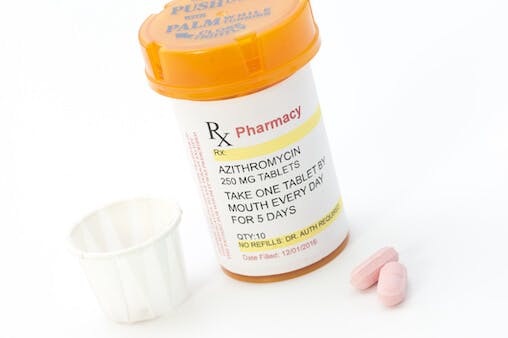
Azithromycin (Zithromax) is a powerful antibiotic with few side effects. It is quite effective in the treatment of ear infections, throat infections, tonsillitis, bronchitis, skin infections, and some sexually transmitted diseases. Azithromycin (Zithromax) has become very popular because it is pleasant to take and very convenient (usually once daily for 5 days. Fewer than 1% of those taking azithromycin stop taking it because of problems with side effects. Most of these side effects are quite minor, but it has been reported to rarely cause a serious form of jaundice.
This is one of several reasons that azithromycin (along with erythromycin, an older antibiotic in the same class) is not typically used in children under 6 months of age when another antibiotic is available. Azithromycin is processed by the body in the liver. The immature livers of infants in the first months of life are less ready to handle this, making the risk of jaundice greater. A two-month-old baby is not simply a little adult, but a developing child with unique metabolic capabilities.
Medications and Breastfeeding
Whenever a woman is breastfeeding, care should be exercised in taking any medicine. Many medicines are known to enter the breast milk and be harmful to the nursing infant. For many medicines, we don’t know if they would be harmful or not. As a general rule of thumb, I would not recommend that a nursing mother take any medicine that I wouldn’t feel comfortable prescribing to her baby. Azithromycin falls into this category, and I recommend that nursing mothers do not take it during their children’s first six months unless there are no other alternatives.
Cholestatic Jaundice and Azithromycin
The type of jaundice associated with azithromycin toxicity is rare and different from the common type of jaundice seen in newborns. It is called cholestatic jaundice (or conjugated hyperbilirubinemia). This can result from direct damage to the liver or from impairment of the normal flow of bile into the intestines. The doctor should keep in mind that there are over 80 different causes of cholestatic jaundice (heart disease, toxins, infections, pituitary or thyroid problems, metabolic disorders, structural problems, cystic fibrosis, etc.). Even if the mother or baby took azithromycin, these other causes must be considered.
With all types of cholestatic jaundice, a danger is that the impaired liver might not produce enough of the materials needed to prevent bleeding. A blood test called the prothrombin time (PT) should be performed to evaluate this possibility. Also, blood sugar should be measured since many of the causes of cholestatic jaundice can result in dangerously low blood sugar levels with few symptoms. If the level is low, the baby should receive frequent or continuous feedings.
If the jaundice was triggered by azithromycin, it is likely to slowly resolve on its own (if the baby is not exposed to more azithromycin). In the meantime, the baby may have trouble absorbing fat, and might need supplemental feedings with an infant formula containing medium-chain triglycerides (which don’t need bile to be digested). The baby should also be given supplemental vitamins A, D, E, and K. Occasionally surgery is necessary to restore bile flow. Overall, though, with attentive care the outlook is good.
Azithromycin is a wonderful medicine. However, a medicine that is great for a person of one age or situation is not necessarily good for someone at another!
Resources and References
LiverTox: Clinical and Research Information on Drug-Induced Liver Injury [Internet]. Bethesda (MD): National Institute of Diabetes and Digestive and Kidney Diseases; 2012-. Azithromycin. [Updated 2021 Apr 20].
Oldenburg CE, Arzika AM, Maliki R, et al. Safety of azithromycin in infants under six months of age in Niger: A community randomized trial. PLoS Negl Trop Dis. 2018;12(11):e0006950.
Smith C, Egunsola O, Choonara I, Kotecha S, Jacqz-Aigrain E, Sammons H. Use and safety of azithromycin in neonates: a systematic review. BMJ Open. 2015;5(12):e008194..
Zeng, L., Xu, P., Choonara, I. et al. Safety of azithromycin in pediatrics: a systematic review and meta-analysis. Eur J Clin Pharmacol. 2020;76:1709–1721.
Alan Greene MD


Our goal is to improve children's health by inspiring parents to become knowledgable partners who can work with their children's physicians in new and rich ways.