Pose your questions on Ask, Answer, Learn to Dr. Greene and the DrGreene.com community.
Ask DrGreene
Dr. Greene will be chatting live for one hour on Tuesday February 16th at 10:00 a.m. PT (Noon CT) (1:00 p.m. ET). Click Here to chat with Dr. Greene
Fast Fact
One of the great wonders of the human body is the ability of damaged cells to be repaired or replaced. Red blood cells, for instance, live for about 120 days. Each day, about 1% of your red blood cells retire to be replaced by a fresh generation. The lens of the eye is a notable exception. The cells of the lens of the eye are never replaced; the proteins of the lens are never replenished. The lens cannot repair itself; damage accumulates over a lifetime.
Cataracts are the result of gradually accumulating damage to the proteins of the lens. The most important source of this damage is exposure to ultraviolet (UV) radiation, especially while one is young.
Behind the lens lies the retina, the thin lining of the back of the eye. The retina is the eye's miracle. This patch of tissue, about the size and thickness of a postage stamp, is able to dissolve and create a new image every tenth of a second.
Today in the United States, retinal diseases are the leading cause of blindness. Macular degeneration, the accumulation of damage in the retina, is the leading cause of blindness from retinal disease. Slowly, over the years, the macula is irreversibly damaged by exposure to UV radiation. About one third of adults over age 65 experience this steady decline of central vision, not correctable by glasses.
Excessive exposure to sunlight during early childhood is harmful to the eyes. Sunlight contains harmful UV radiation.
The risk for retinal damage from the sun's rays is greatest in children less than 10 years old, although the consequences usually do not become apparent until well after they are adults.
All children should be taught to wear sunglasses, especially between 10 AM and 2 PM, when ultraviolet exposure is the most dangerous. This is true even for children with darker eye colors, even though their darker pigments afford partial protection. Of course, children with light-colored eyes need sunglasses all the more.
Ultraviolet exposure is at its peak when children are at high altitudes, snow-covered landscapes, bright sandy beaches, or near reflective bodies of water.
All sunglasses are not the same. Effective sunglasses should block both UVA and UVB radiation. The sunglasses must be measured to block 99% to 100% of UVA or UV400 (400 nm is the wavelength of UVA radiation). Thankfully, all sunglasses block UVB radiation.
Large lenses that fit close to the eyes are best. Those that block visible blue light are even safer.
Expensive brand names and polarizing lenses are no guarantee.
Ordinary sunglasses make the situation WORSE! The dark lenses cause the pupils to dilate, allowing more of the dangerous UVA radiation to damage the lens and the retina.
What do Olympic gold medalist figure skater Kristi Yamaguchi, Super Bowl Champion All-Pro quarterback Troy Aikman, actor-writer-musician-composer Dudley Moore, Hall of Fame sports announcer Pat Sumerall, romantic poet Lord Byron, comedian-actor-writer-director Damon Wayans, British King Richard III, Heisman trophy winner Charles Woodson, and Olympic gold medalist pioneering women’s soccer star Mia Hamm all have in common?
You’ve already guessed. They were all born with clubfeet!
What is clubfoot?
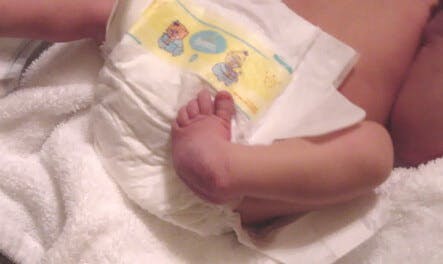
Clubfoot is a deformity of the foot and lower calf. The bones, joints, muscles, and blood vessels of the limb are abnormal.
Who gets clubfoot?
Anyone can be born with clubfoot. It can run in families and is slightly more common in boys. Most children born with clubfoot have no other congenital problems, but sometimes clubfoot occurs in association with other abnormalities or syndromes.
What are the symptoms of clubfoot?
Although the name “clubfoot” sounds like a brutish Dickensian deformity, the actual appearance is that of a normal foot turned down and inwards. Without treatment, the child would walk on the outer edge of the foot. It is stiff and cannot be brought into normal position.
Is clubfoot contagious?
No
How long does clubfoot last?
Clubfoot does not improve with time. It lasts until treated.
How is clubfoot diagnosed?
The diagnosis is made by physical examination. X-rays are used to further evaluate clubfoot.
How is clubfoot treated?
Clubfoot is treated by an orthopedic surgeon. Taping, splints, and casts are often used. The foot is gently stretched closer to the correct position and then placed in a cast to hold it there. This procedure is repeated multiple times to bring the foot into the best position possible.
House dust mites are tiny creatures that live in pillows and mattresses, carpets, and couches – quietly eating dead skin cells and hair. Click here for tips on taking control of dust mites
So should we be concerned about a little boy who wants to be called a girl...
I walked without crawling when I was a kid and I think my daughter is on the...
I'm sure you will check with the baby's pediatrician, but you can also check...
Does she have any friends or cousins who are potty trained? My daughter...