
Bowlegs: A-to-Z Guide from Diagnosis to Treatment to Prevention
Introduction to bowlegs:
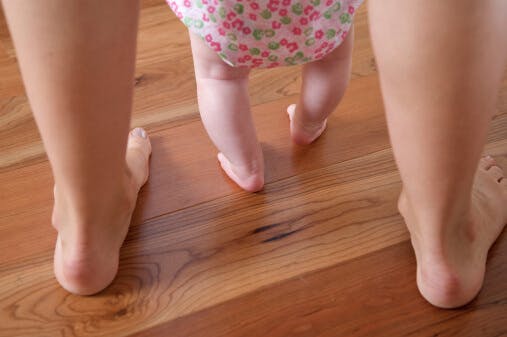
When your baby starts toddling about, it’s normal for the legs to curve outward at the knees. Parents are often concerned, especially if there are adults in the family who are bowlegged or who needed splints or braces while growing. Most of these bowlegs are normal, although a select few do require treatment.
What is it?
The tight fit inside the uterus leads to bowing of the legs that parents often do not notice until the child starts to stand and walk. Most children between one and two are quite bowlegged. This normal developmental pattern is called physiologic genu varum. (‘Genu’ means ‘knee.’)
The second most common cause of bowlegs is called Blount’s disease, or tibia vara. In this uncommon condition, one side of the leg bone (‘tibia’) grows abnormally.
In some rare cases, children can have bowlegs from other conditions such as vitamin D deficiency (rickets), arthritis, trauma, infection, tumors, or bone diseases.
Who gets it?
Physiologic bowlegs are present at some point in most children, especially up to age 2.
Blount’s disease can occur in babies, school-age children, and teens. It is most common among the very obese and in those of African-American descent.
What are the symptoms?
Normal bowlegs improve over time. As it corrects, some children with bowlegs then go through a period of”genu valgum” or “knock-knees” before their legs finally straighten fully. When bowlegs get worse after age 2 they should be evaluated. The same is true if the bowing is extreme, if only one side is affected, or if the child is otherwise not growing normally.
Is it contagious?
No
How long does it last?
Physiologic bowlegs improve greatly by age 2. They can continue to improve for years later. Over 95 percent of those with physiologic bowlegs – even severe physiologic bowlegs – will become normal by adolescence with no treatment.
How is it diagnosed?
The shape of the legs changes slowly throughout childhood. They should be followed closely at each routine physical exam. If there is reason for concern, some type of x-ray or MRI evaluation is usually the next step.
How is it treated?
Physiologic bowlegs generally need no treatment at all. In fact, the braces, corrective shoes, and exercises that used to be common can hinder normal straightening of the legs.
Blount’s disease usually does require treatment. Here braces may be helpful, but surgery is often necessary.
With other types of bowlegs, identifying and addressing the underlying cause is the first step.
Surgery might be used in a variety of situations if treatment is needed.
How can it be prevented?
Anything that decreases space in the uterus (twins, large babies, maternal diabetes) can make bowlegs more pronounced. Obesity in children can lead to greater bowing of the legs. Maintaining normal weight and getting plenty of calcium and vitamin D is wise.
Physiologic bowing is a normal part of development and should not be entirely prevented.
Related concepts:
Genu varum, Tibia vara, Blount’s disease.
Alan Greene MD


Our goal is to improve children's health by inspiring parents to become knowledgable partners who can work with their children's physicians in new and rich ways.