
Unusual Breath Odors & What They Mean
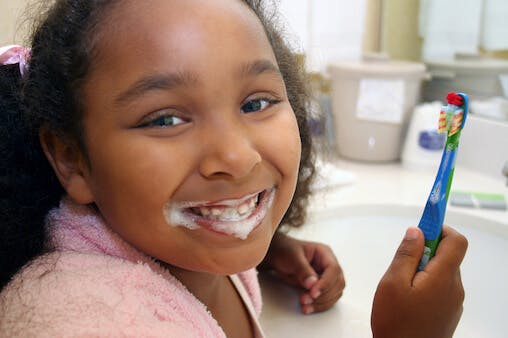
In children with good oral hygiene, smelly breath that persists throughout the day is most often the result of mouth-breathing, which dries out the mouth and allows the bacteria to grow. Saliva cleanses and rids the mouth of bacteria, so anything that causes dry mouth may cause bad breath as well.
Children who consistently breathe through their mouths might have colds, sinus infections, allergies, or enlarged tonsils or adenoids blocking the nasal passages, so a visit to the pediatrician is in order.
Thumbsucking or sucking on a blanket can also dry out the mouth. Dry mouth can also be caused by certain medications, so be sure to mention any medications and/or supplements your child is taking when you visit the pediatrician.
For most children, bad breath is not associated with any serious conditions. However, here is a list of some uncommon, but telltale, odors.
Unusual Breath Odors:
- Acetone (fruity smell) – diabetes or acetone, alcohol, phenol, or salicylate ingestion
- Ammonia – some types of urinary tract infections, or kidney failure
- Asparagus – eating asparagus (very unusual in children;>))
- Bitter almonds – cyanide poisoning
- Cat’s urine – odor of cats syndrome (beta-methyl-crotonyl-CoA-carboxylase deficiency)
- Celery – Oasthouse urine disease
- Dead fish – stale fish syndrome (trimethylamine oxidase deficiency)
- Fresh-baked bread – typhoid fever
- Foul – tonsillitis, sinusitis, gingivitis, lung abscess, dental cavities, tonsil stones, or gastroesophageal reflux (some of these are actually quite common)
- Garlic – arsenic, phosphorus, organic phosphate insecticides, or thallium poisoning
- Horse-like (also described as mouse-like or musty) – phenylketonuria
- Rancid butter – odor of rancid butter syndrome (hypermethionemia and hypertyrosinemia)
- Raw liver – liver failure
- Sweaty socks – odor of sweaty feet syndrome (Isovalryl CoA dehydrogenase deficiency)
- Sweaty socks – odor of sweaty feet syndrome II (Green acyldehydrogenase deficiency)
- Violets – turpentine poisoning
Three-year-olds often stuff items in their noses, and then forget about them. When my son Kevin was three, he put five peas up his nose before anyone found out! Watch for the combination of smelly breath and a smelly, yellow nasal discharge — especially from one nostril. You and I might not think of stuffing peas up our noses, but three-year-olds think outside the box!
References and Resources
Amir E, Erica et al. Halitosis in children The Journal of Pediatrics. 1999;134(3):338-343.
Bawazir OA. Risk Factors, Diagnosis, and Management of Halitosis in Children: A Comprehensive Review. J Contemp Dent Pract. 2021 Aug 1;22(8):959-963.
Mace JW et al: The child with an unusual odor: A clinical resume. Clinical Pediatrics. 1976;15(1):57-62.
Rosenberg M: Clinical assessment of bad breath: Current concepts. J Am Dent Assoc. 1996; 127:475.
Alan Greene MD


Our goal is to improve children's health by inspiring parents to become knowledgable partners who can work with their children's physicians in new and rich ways.