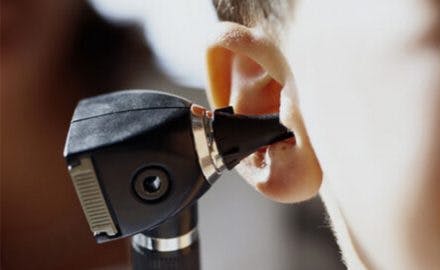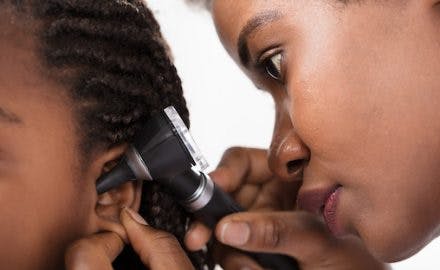
I held the powerful laser in my hand. A magnified image of an eardrum loomed large on the nearby computer monitor. Watching the screen, I carefully aimed the laser at the lower half of the eardrum. Clumsily, I stepped on the foot pedal, and instantly a perfect round hole, 0.079 inches in diameter, appeared in just the right spot.
At the annual meeting of the Academy of Pediatrics in San Francisco, I had the opportunity to try out the OtoLAM laser (ESC/Sharplan, Bothell, WA) on a mannequin. This exciting technology may revolutionize the treatment of ear infections in children.
Ear infections are caused by the accumulation of germ-containing fluid in the middle ear. Traditionally, the major treatment options have been antibiotics (to kill the germs) or the surgical insertion of pressure-equalization (PE) tubes (to drain the ear and improve eustachian tube function).
Both of these treatments have drawbacks. Often, the antibiotics don't work. Round after round of antibiotics are prescribed, with mounting costs and side effects. Even when the antibiotics do work, fluid remains in the middle ear for weeks or months after the bacteria are gone, affecting the child's hearing.
PE tubes are extremely effective but are expensive in several ways. When my son had tubes placed, the hospital charges were $2729.20. The surgeon's fee (about $1200 in my area) and the anesthesiologist's fee (about $500) can bring the grand total to more than $4400! The procedure also requires separating the child from the parents in a frightening environment and subjecting the child to general anesthesia. In addition, there is a small but real risk of complications, such as a hole that never closes, necessitating another operation. More PE tube insertions are performed than any other type of surgery.
The new flashscan carbon dioxide laser is able to safely create a tiny hole in the eardrum in 1/10 second without the need for general anesthesia. The procedure can be done in an office, with the child seated on the parent's lap.
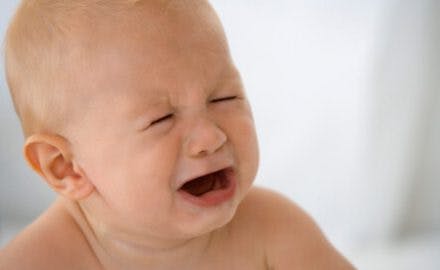
A topical anesthetic is placed in the child's ear. Once it has taken effect, the entire procedure from start to finish takes only about 5 minutes in the doctor's office. Adults who have had the procedure done describe a startling, loud popping sensation when the laser hits but no pain or residual tenderness. Small children usually cry for a few minutes but are playing happily before they leave the office.
Two weeks ago, I sat in the lounge of the Argent Hotel in San Francisco with Gordon Siegel, M.D., F.A.C.S., Instructor of Otolaryngology at Northwestern University School of Medicine and one of the pioneers of this procedure now called laser-assisted myringotomy (LAM). His passion for improving kids' health is inspiring.
Dr. Siegel cautioned that while LAM is very promising, careful step-by-step testing of the OtoLAM for each application is important before making sweeping changes. So far, the OtoLAM has been used in children who still have fluid in the ear 4 weeks after initial detection. Dr. Siegel has used the procedure in 166 ears, with about 75% of them requiring no further treatment, antibiotics, or surgery (these are preliminary numbers from a phone conversation with Dr. Siegel - a large-scale, multicenter trial is underway).
So far, the eardrums have healed beautifully, with the holes closing about 4 weeks following the laser procedure. Still, with PE tubes, persistent perforation takes place in only about 1 in 600 ears, so it is too soon to say whether the laser will have a better track record than tubes, when it comes to complications.
The total cost for tubes is at least $2000, plus the cost of getting to the point of having tubes inserted - usually 6 to 8 rounds of expensive, broad-spectrum antibiotics, 6 to 12 office visits, time off from work, and the inconvenience of sleepless nights and traveling with sick children. OtoLAM costs between $200 and $400 and is now done after only 2 rounds of simple antibiotics.
Each year, more than 1 million PE tubes are inserted in children under general anesthesia in the United States alone. More than 30 million prescriptions for antibiotics are given for ear infections. It will be exciting to see exactly how OtoLAM fits into a new treatment strategy and for which children it proves to be the best option. The possibilities are mind-boggling.
It is easy to see how this speedy, painless procedure with few if any adverse effects could revolutionize the status quo. Although it is not yet widely available, within 5 years, I expect it to spearhead, slashing the surgery rate by 80% and the number of antibiotic prescriptions by 80% as well!
N.B. OtoLAM may not be available at this time. Since the writing of this article, the OtoLAM web site has become inactive and we have not been able to reach anyone from the company. If there are further developments, we will post them here.