
Dr. Greene’s Organic Rx — Item #3
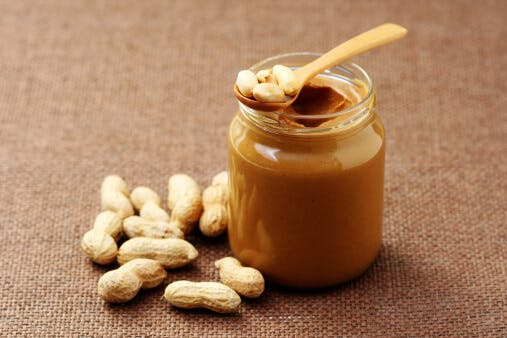
#3 Peanut Butter
More acres are devoted to growing peanuts in the U.S. than to any fruit, any vegetable, or any nut (peanuts are legumes, like beans or peas). More than 99% of these acres are conventional16. Peanut butter is the leading use of all these acres of peanuts17.
I loved peanuts and peanut butter when I was a kid. Baseball games, circuses, favorite sandwiches made with love by my mom… but somewhere along the way, about the time peanut allergies started increasing, I started thinking of peanut butter as an over-sweetened, unhealthy, high fat food. And if you look at the ingredients on a jar of conventional peanut butter, it’s not hard to see why. In addition to peanuts, the next ingredient may well be corn syrup, then sugar. You might also find partially hydrogenated and/or fully hydrogenated fats, mono- and diglycerides, the pesticides ferric orthophosphate18 and copper sulfate19, and a long list of other ingredients.
Organic peanut butter will have a short, natural ingredient list. It might contain only organic dry roasted peanuts, perhaps with a pinch of salt. Peanuts are a good source of heart-healthy20 mono-unsaturated fats, protein, vitamin E, niacin, and folate21. Peanuts are packed with antioxidants, on par with blackberries (and roasting peanuts raises the antioxidant levels) 22. And they even contain resveratrol (something special we’ll talk about on page xx). Organic peanut butter can be a good picture of something convenient made naturally from whole foods.
Back on the farm, peanuts start out as above-ground flowers. Then the stalks bend over, and burrow under the ground, where the peanut matures. Molds can grow on peanuts during growth and storage, so fungicide use on peanuts is very common (on strawberries and grapes too). Fungicides can be quite toxic and disrupt endocrine systems. A recent study suggests that in pregnant animals, even one-time exposure to certain fungicides may affect several future generations23.
Organic farming methods, including crop rotation, cover crops, and tillage, tend to result in more bio-diverse soil and less mold and mold toxins than does spraying fungicides24. I suspect organic growing and processing would result in fewer allergies as well.
Read more from this series
- Dr. Greene’s Organic Rx — What you need to know!
- Dr. Greene’s Organic Rx — Item #1 — Milk
- Dr. Greene’s Organic Rx — Item #2 — Potatoes
- Dr. Greene’s Organic Rx — Item #3 — Peanut Butter
- Dr. Greene’s Organic Rx — Item #4 — Baby Foods
- Dr. Greene’s Organic Rx — Item #5 — Catsup
- Dr. Greene’s Organic Rx — Item #6 — Cotton
- Dr. Greene’s Organic Rx — Item #7 — Apples
- Dr. Greene’s Organic Rx — Item #8 — Beef
- Dr. Greene’s Organic Rx — Item #9 — Soy
- Dr. Greene’s Organic Rx — Item #10 — Corn
- Dr. Greene’s Organic Rx — Bonus Item #11 — Wine
16Certified organic and total U.S. acreage, selected crops and livestock, 1995-2005. USDA. December 15, 2006.
17National Peanut Board Offical Website. http://www.nationalpeanutboard.org/ accessed Feb 13, 2007.
18EPA Technical Document (034903). Ferric orthophosphate – pesticide type: biochemical molluscicide. EPA.gov. Accessed Feb 12, 2007.
19Pesticide Action Network: Pesticides Database – copper sulfate. http://pesticideinfo.org/Detail_Product.jsp?REG_NR=00102200573&DIST_NR=001022accessed Feb 12, 2007.
20Alper CM, Mattes RD. Peanut consumption improves indices of cardiovascular disease risk in healthy adults. J Am Coll Nutr; 22(2):133-41 April 2003
21USDA National Nutrient Database for Windows. Standard Release SR-19.
22Talcott S, Passeretti S, Duncan C, Gorbet W. Polyphenolic content and sensory properties of normal and high oleic acid peanuts. Food Chemistry 90(3):379-388 May 2005.
23Anway MD, Cupp AS, Uzumcu M, Skinner MK. Epigenetic transgenerational actions of endocrine disrutpors and male fertility. Science. 308(5727):1466-1469. June 3 2005.
24Benbrook CM. Breaking the Mold – Impact of Organic and Conventional Farming Systems on Mycotoxins in Food and Livestock Feed. Organic Center State of Science Report. September 2005.
Alan Greene MD


Our goal is to improve children's health by inspiring parents to become knowledgable partners who can work with their children's physicians in new and rich ways.