
Homemade Baby Food
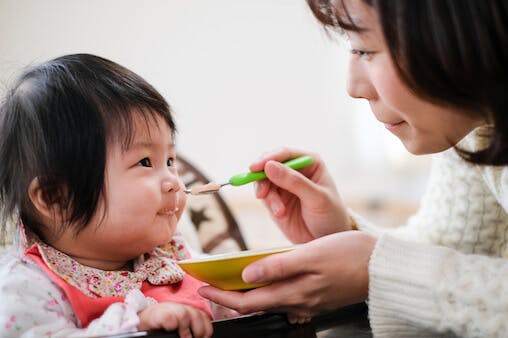
Question
I just started my 6-month-old on solids. Are the only foods she can eat right now the ones that are on the shelves in stores?
Dr. Greene's Answer
Baby food is a modern myth. When my father was born, almost all babies ate homemade baby food — real food mashed up for babies. By the time I was born, almost all babies ate baby food from jars found on store shelves. What happened in between? Some very effective advertising:
“You can’t, with ordinary home equipment, prepare vegetables as safe, as rich in natural food values, as reliably uniform as ready-to-serve Gerber products!” declared an early baby-food ad in Ladies’ Home Journal. This was part of a large, successful campaign to convince parents that good baby food was scientific, uniform, measurable, twice-boiled, and perfectly smooth—and that you couldn’t do it yourself no matter how hard you tried.
This way of thinking undermines parent’s confidence in being able to do something as basic as feeding their own baby. The task seems difficult, complicated, and exhausting.
What NOT to Include in Homemade Baby Food
Actually, it is quite easy. The only things not to feed a 6-month-old baby are
1) Foods with a texture or shape they might choke on,
2) Foods that might cause an infection (such as honey, unpasteurized dairy products, or undercooked eggs, meat, or fish), and
3) Junk food (such as fried foods or foods made from processed white flour, or with added sugars, salts, chemical artificial colors, etc. etc.)
Feeding babies real food is a delicious, fun, safe journey, better than anything you could find in jars alone. Feeding Baby Green is a complete informative guide, full of easy tips to give you the knowledge and confidence you need to take charge at each stage of the journey, up through the picky preschool years and beyond. Or for an easy overview Click Here for Dr. Greene’s Quick Guide to Starting Solids.
Alan Greene MD


Our goal is to improve children's health by inspiring parents to become knowledgable partners who can work with their children's physicians in new and rich ways.