
Fast Facts about Bed Wetting
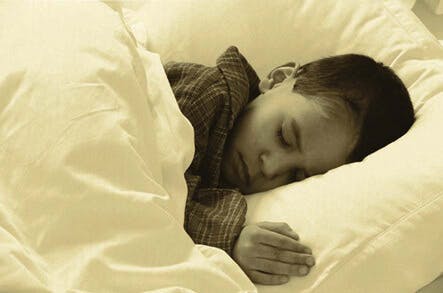
Contrary to popular opinion, bed wetting is a very common problem. It affects somewhere between five and six million children.
Bed-wetting, or nocturnal enuresis, can be divided into two types: primary nocturnal enuresis and secondary nocturnal enuresis. These two types are very different in their causes and treatments.
In primary nocturnal enuresis, children have never achieved complete nighttime control – always wetting at least two times a month.
Secondary nocturnal enuretics are completely dry at night for a period of at least six months and then begin wetting again.
In secondary enuresis, the key is finding out exactly what has changed. There might be a new psychological stress such as a divorce, a move, or a death in the family. It might be something physical: the onset of a urinary tract infection or diabetes, for example. It might be a situational change – perhaps altered eating, drinking, or sleeping habits.
The great majority of bed-wetting children are primary enuretics. For primary enuretics, the cause is decidedly NOT stress or behavioral concerns.
In a survey of 9,000 parents of kids ages 6 – 17, 22% stated that they thought the reason their child wet the bed was laziness (survey conducted by ICR Survey Group from July 10 1996, through August 6, 1996). I am happy to tell you that this could not be further from the truth!
Research has shown that primary nocturnal enuresis is often inherited. If both parents were bed-wetters, 77% of their children will be. If only one parent was, 44% of their offspring will. If neither parent wet the bed, only about 15% of their children will wet the bed.
With primary nocturnal enuresis one almost always finds another relative who was a bed wetter. This corresponds to what is called an autosomal dominant inheritance pattern.
In recent years, researchers have identified an association with bedwetting and two genes named ENUR1 and ENUR2. In studying certain families with primary nocturnal enuresis, researchers discovered that members who wet the bed were more likely to have the ENUR1 or ENUR2 gene than those who did not. More recently, the possibility of a third primary nocturnal enuresis-related gene (ENUR3) on chromosome 22 has also been uncovered. Presumably these genes affect either whether children will need to urinate at night or how easily they can wake up when their bladders are full.
Alan Greene MD


Our goal is to improve children's health by inspiring parents to become knowledgable partners who can work with their children's physicians in new and rich ways.